Bad
Three hundred theologians came to a spa town to reconsider the Augsburg Confession. The name of the place is a bath; the academy that received them was three years old; and the house, it turns out, was Blumhardt's own.

Every place in this story has a name that means something, and most of them mean something dull. Stuttgart is a stud farm. Göppingen is somebody’s people. Württemberg is a hill.
Bad Boll is a bath.
That is the whole of it. Bad is the German for bath, and it is a title rather than a name — the licence a German spa town earns and then wears in front of its own name ever afterward, the way a man wears a doctorate. Sulfur and thermal springs were found at Boll in 1595. A bath house followed the next year, and a spring house went up over the water that is standing yet. The village had been Boll since long before anyone thought to drink there; it did not officially become Bad Boll, as a municipality, until 2007 — four centuries late, and more than half a century after everything in this book.
So when the Missouri Synod sent seven of its best men across the Atlantic in June 1948 to reconsider the Augsburg Confession with the theologians of a broken church, it sent them to a health resort. More than three hundred Germans came to meet them. Germany had changed its currency three days before, and they came anyway.
I have written the sentence several ways and it sounds like a joke every time. It is not. But the incongruity is worth staying with, because the choice of that house was not casual, and the house is why this series has the name it does.
Wonder-water
The Württembergers called it the Wunderbad — the wonder-bath — and for two and a half centuries it did what such places do. People with money and complaints came and took the water and went home. There is a stucco dining hall. There was a season.
Then in 1852 a Württemberg pastor named Johann Christoph Blumhardt bought the place.
Blumhardt had come from a parish at Möttlingen with a reputation that made his church authorities uneasy — he had spent two years in what he understood as a struggle for the soul of a young woman of his parish, and had come out of it convinced, and had watched an awakening run through his village afterward. He wanted a house where people could come and stay and be prayed for. He bought a spa and used it for that. He and his son Christoph worked at Bad Boll as pastor and healer from 1852 until Christoph’s death in 1919 — sixty-seven years, two generations, in a bath house.
What came out of that house is out of all proportion to it. The younger Blumhardt went into politics on the wrong side for a pastor, sat in the Württemberg parliament as a Social Democrat, and became one of the few men the young Karl Barth would admit to having learned something from. The theology that runs from Bad Boll into the twentieth century is a theology of the kingdom of God breaking into the present, and it is about as far from a Missouri Synod seminary as it is possible to get and remain Lutheran.
Nobody in St. Louis, so far as my files show, had the least idea.
Akademeia
The other word in the address is Greek, and older.
Academy comes from the Akademeia, the olive grove outside the walls of Athens, named for a local hero called Akademos who was supposed to have owned the ground. Plato taught there. The point of the grove was that it was outside — not in the assembly, not in the courts, not where anything was decided. A place a little way out of the city, where men could argue about first things without the argument counting against them that day.
Which is exactly what Germany needed in 1945, and what one man had worked out how to build.
On 21 June 1945, six weeks after the surrender, Bishop Theophil Wurm of Württemberg set out to visit the surviving church leaderships of western Germany. The Americans made the journey possible at a time when every other German was under curfew from dusk to dawn. Wurm took his wife, his personal assistant, three brothers named Müller, and a young theologian named Helmut Thielicke. They met Baden’s leadership at Herrenalb. They found Martin Niemöller in Frankfurt, whom nobody had known to be alive.
Two of the men in that party — Eberhard Müller, who was one of the brothers, and Thielicke — carried between them the idea for what came next. On the twenty-ninth of September that year, Michaelmas, Wurm and Müller founded the Evangelical Academy at Bad Boll: the first of them in Germany, and the model for all the rest. Müller ran it for the next twenty-six years.
The idea was not a conference centre. The idea was that the church had spent twelve years talking to itself while the country went where it went, and that what was needed now was a house where the church and everyone else — trade unionists, industrialists, teachers, farmers, journalists — could be got into the same room and made to listen. A grove outside the walls, four and a half months after the war ended, on the feast of the archangel.
A house that belonged to nobody
Now the reason for all of this.
When the Missouri Synod’s men and the German territorial churchmen agreed, at the end of 1947, to meet and reconsider the Augsburg Confession together, the hardest question after what shall we discuss was where.
Not a seminary: every seminary in Germany belonged to somebody, and to sit down in one was to have conceded something before the first paper. Not a consistory, for the same reason. Not an American installation, which would have made the thing look like what a good many people already suspected it of being. What the enterprise required was a house that belonged to nobody in the argument, and had been built on purpose for arguments, and was three years old and therefore carried no history that anyone needed to defend.
There was exactly one such house in Germany, and it was in a spa town at the foot of the Swabian Alb.
Until two weeks ago I could not have told you which building that meant; the American papers say Bad Boll and leave it at that. Then the archive at Bad Boll — of which more in a moment — sent this project the letters in which the arrangements were actually made, and the plainest of them is from the house itself. On 17 January 1948 the management of the Kurhaus wrote to the American military government about “the conferences which the American Missouri Synod wishes to hold in our house”: three sessions across a month of summer, 85 beds in the house and 65 cots in the youth hostel, five meals a day, the Americans to supply everything but the vegetables — and a closing request that the German participants kindly bring their own bed linen and towels.
The house of that letter is the house Blumhardt bought, passed after the younger Blumhardt’s death in 1919 to the Moravian Brethren, some eighty of whose refugees were still living in it; Müller’s three-year-old Academy arranged its conferences under the same roof. So it can be written plainly: the Missouri Synod’s seven men and their three hundred guests ate, slept, and argued the Augsburg Confession in the Wunderbad itself — in the bath house where father and son had prayed with the sick for sixty-seven years. Nobody chose it for that. It is simply what the only free house in Germany happened to be.
The same file explains the crowding. The Academy had first offered October; the July date was won by tearing up its own summer programme, and even then the house was shared — the leading German writers were holding their Dichtertagung, their poets’ conference, in the same building in the same weeks. Three hundred theologians, a youth hostel full of cots, and the poets of a ruined country, all at a bath.
They met there in June 1948 and came back for six more summers, and when the conferences moved on to Berlin and Uelzen and Oberursel and Strasbourg and London and Gothenburg, they kept the name of the place where they had started. Everything this book is about is named after a bath.
It is still there
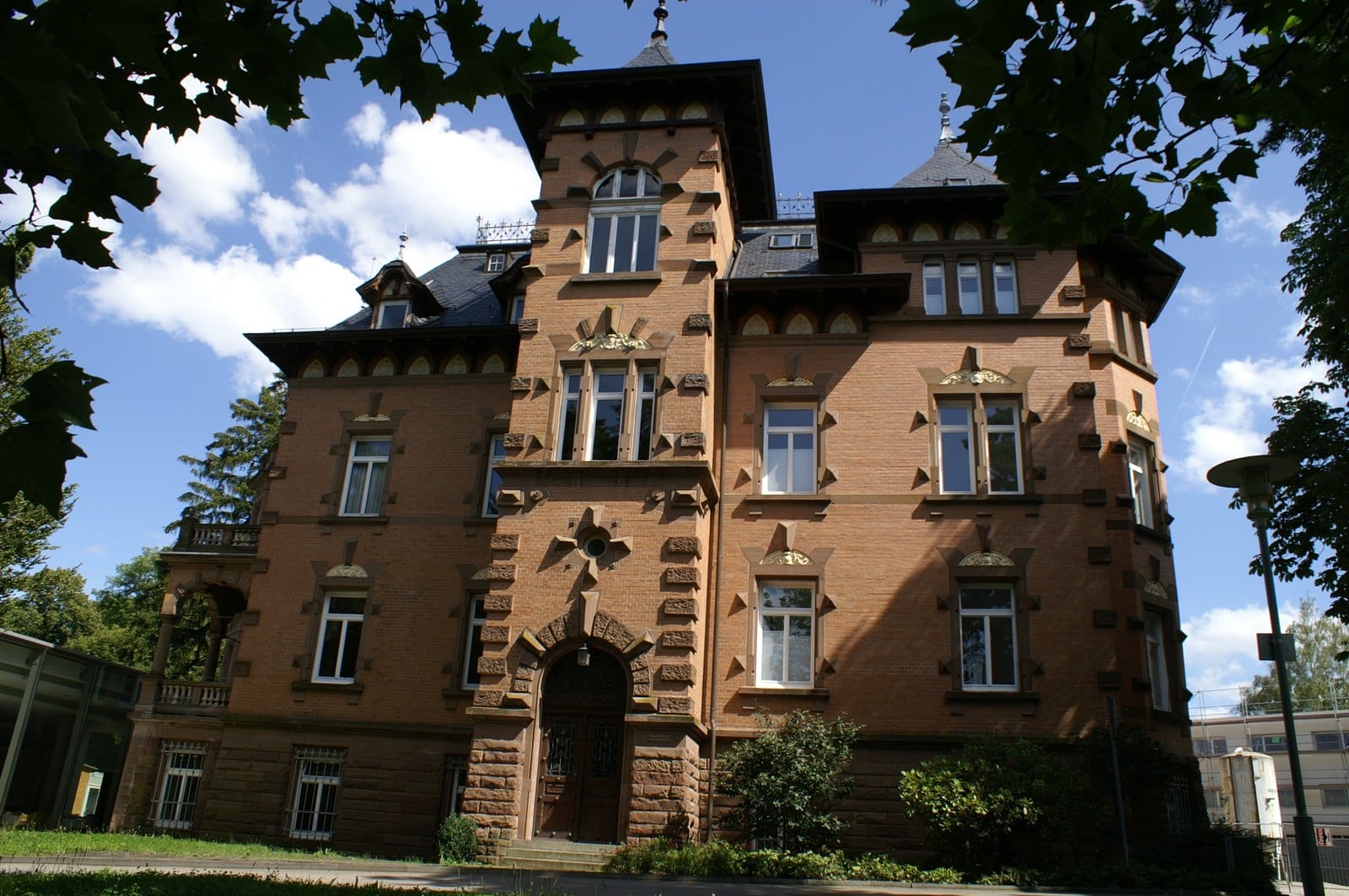
The Evangelical Academy at Bad Boll is still open. Eighty-one years on it is still doing what Müller built it for — putting people who disagree into one house for a few days and feeding them — and its programme now runs to the things that trouble a country in this decade rather than that one.
A reader in Württemberg asked me three weeks ago, courteously, what my contacts with it were. The honest answer was none, and I gave it.
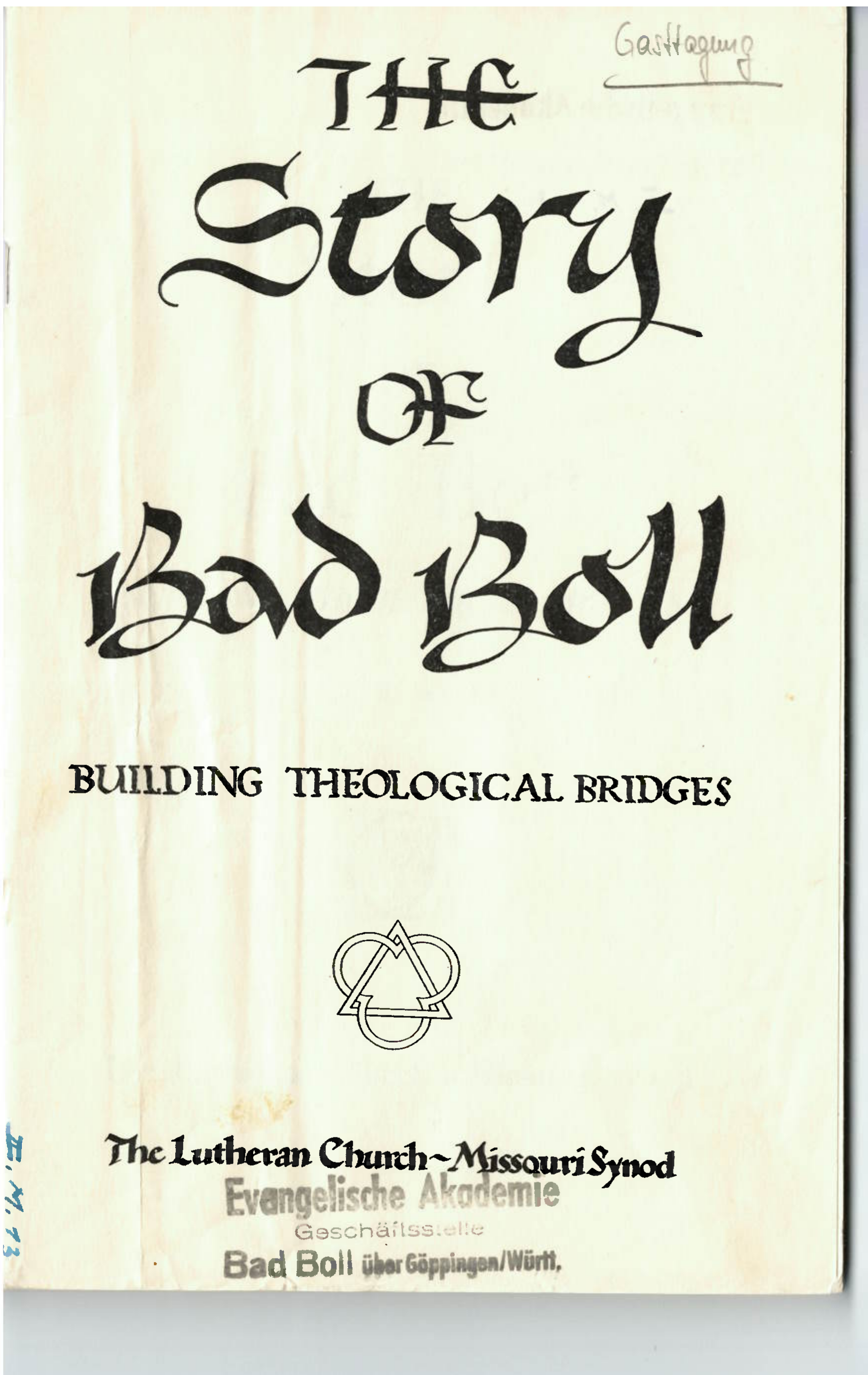
That answer did not survive the month, and he is the reason. Through his good offices the archive at Bad Boll went into its files and sent across the ocean the first German-side papers this project has ever held — Müller’s letters, the Kurhaus’s terms, and the Academy’s own library copy of The Story of Bad Boll, the small booklet the Missouri Synod published about the conferences in 1949. The Academy’s stamp sits on the title page directly beneath the Synod’s imprint, and at the head of the page a librarian has filed the whole enterprise, in pencil, under a single word: Gasttagung. A guest conference.
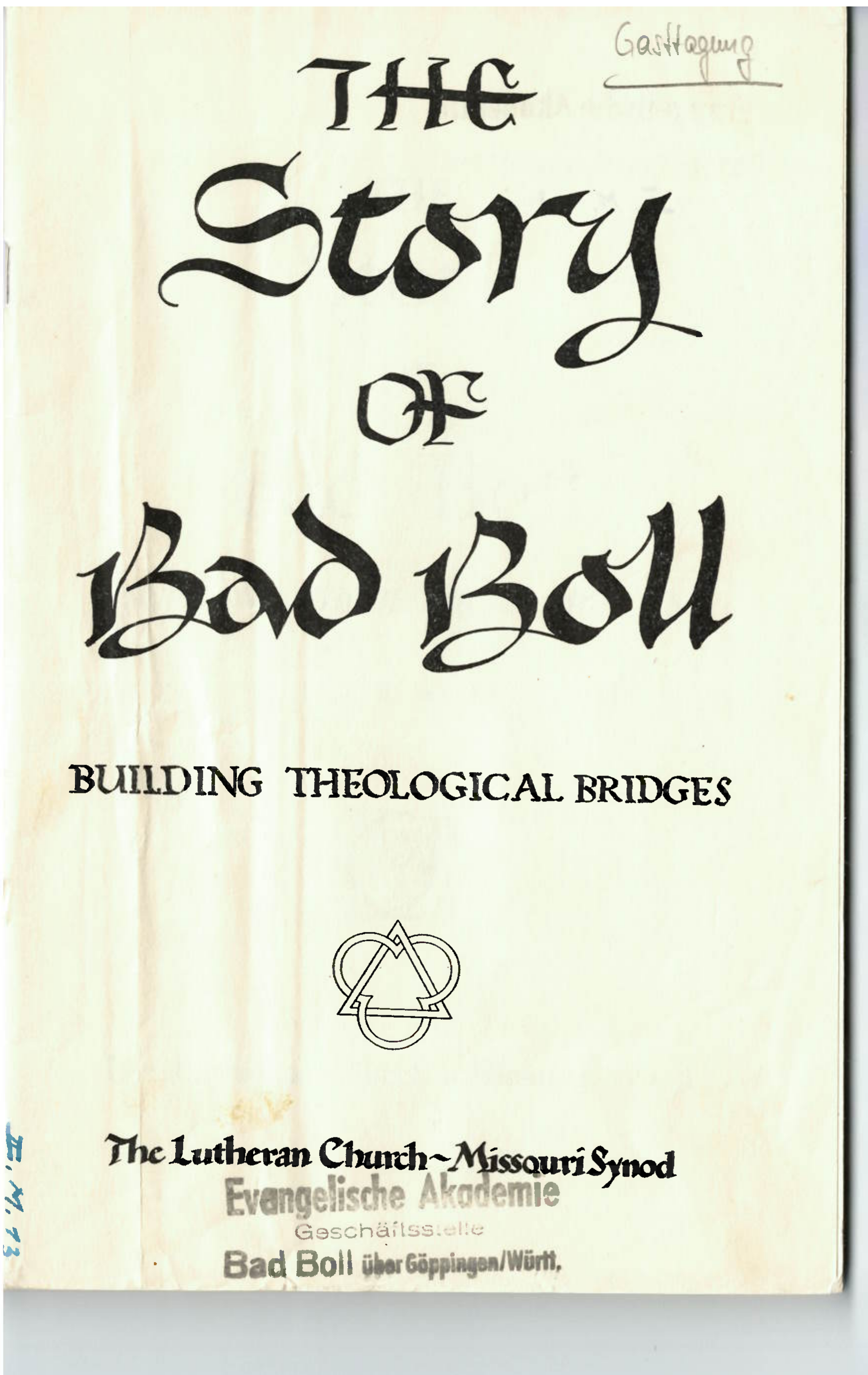
That is what it was, and the house’s catalogue may have the last word. For seven summers the Missouri Synod were guests in a bath — a house that exists to receive people, do them good, and send them home. The conferences went home in 1954. The house went on receiving.
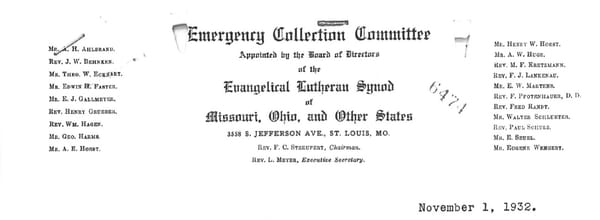
Next Thursday, the third of September, the series proper begins, and it begins where the money did: with a letterhead, in 1932, from a committee formed to save the Missouri Synod from its own debts.
Sources and notes: The history of the springs, the bath house, and the renaming of 2007 follows the account in the book’s introduction. Bishop Wurm’s visitation journey of June 1945 is Hermann Ehmer, Württembergische Kirchengeschichte: Von der Christianisierung bis zur Gegenwart (Stuttgart: Calwer Verlag, 2025), 699; the Academy’s founding on Michaelmas 1945 and Eberhard Müller’s twenty-six-year directorship follow the Academy’s own published history. The Kurhaus’s letter of 17 January 1948, and Eberhard Müller’s letters of 9 and 17 January 1948, are held by the Evangelisches Archiv Baden und Württemberg, Standort Bad Boll, and are quoted from the page images; the terms they record are the January plan, not the executed calendar. The title page of the Academy’s library copy of F. E. Mayer, The Story of Bad Boll (1949), appears by courtesy of the same archive. The photograph of the Villa Vopelius is by Dr. Eugen Lehle (2009), CC BY-SA 3.0, via Wikimedia Commons.
Researched and written by Dr. Albert B. Collver III, from the archives behind the forthcoming book Bad Boll: Missouri at the Crossroads (Concordia Historical Institute). Corrections, recollections, and documents of your own are welcome at info@badbollbook.com.
© 2026 Albert B. Collver III · Thursdays at Bad Boll. Archival documents are reproduced by courtesy of the holding institutions, as credited; the research, text, and annotations are the author’s. Please cite or link rather than republish.